
New Device May be Able to Treat Cancer
Updated: Aug 4
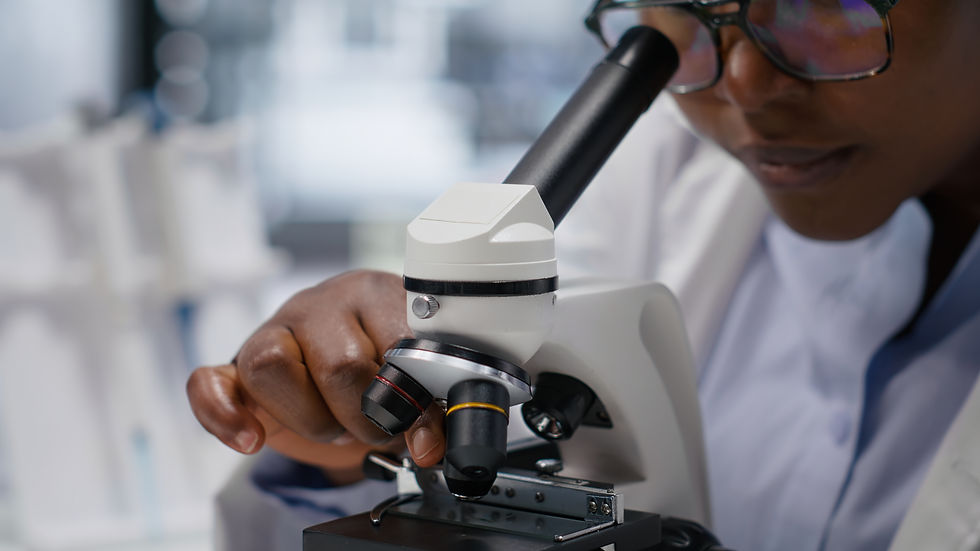
A new treatment for leukemia, lupus, and other diseases is currently being developed by researchers at Johns Hopkins School of Medicine. They are creating a new kind of biodegradable nanoparticle, a microscopic object, that scientists believe can teach the body’s immune system to locate and destroy disease-causing cells in our bodies While still in early stages of testing, it has the potential to be revolutionary.
Previous attempts to use specially engineered immune cells - known as CAR-T cells- to treat conditions like blood cancers had been successful, however they were costly and inefficient. This new design was developed to be simpler. Scientists successfully stimulated immune cells to seek out and destroy B-cells, which are the cause of leukemia, lupus, and other diseases.
The researchers’ findings were published in Science Advances, a peer-reviewed journal published by the American Association for the Advancement of Science.
Diseases like leukemia and other cancers can be difficult to cure because the diseased cells are constantly multiplying, creating a moving target for doctors to try and catch and curtail. That continued cell multiplication also means that there is a greater chance that the diseased cells mutate further, possibly necessitating a different treatment.
Over the course of their experiments, doctors found that within 24 hours of injecting healthy mice with the nanoparticles, 95% of the B cells within their circulatory system were destroyed, as well as eliminating 50% of those in the spleen.
While similar cell therapies are actively used today, they are prohibitively expensive, costing $300,000 to $475,000.
Professor Jordan Green, PhD, the Herschel L. Seder Professor of Biomedical Engineering at the Johns Hopkins University School of Medicine, explained that these nanoparticles have the potential to offer a cheaper, more broadly accessible treatment option for patients, stating that “These experiments were successful using just one dose of the nanoparticles, and an advantage of using an off-the-shelf therapy is the potential for scalable manufacture and broad accessibility, whereas current forms of CAR-T therapies are very expensive and time-consuming.”
Professor Green worked for five years with Dr. Jonathan Schneck, MD, PhD, an immunology expert, to develop the nanoparticles deployed in the study, combining Schneck’s research on artificial immune cells and Green’s research on nanoparticles.
Green explains that designing nanoparticles that can reach immune cells throughout the circulatory system posed a much greater challenge than those designed to be administered to a localized site, such as the eye. This is because the immune cells naturally resist foreign particles
The duo of researchers are further collaborating on a more than $40 million federal agency grant to further develop and commercialize cell engineering tools.


soicauxsmb24.com hôm qua mình đang xem mấy bài nói về soi cầu MB ngày 3 9 2026 nên tiện ghé qua luôn cho đỡ phải lục nhiều chỗ. Mở ra thấy họ để đúng mục theo ngày khá rõ, kéo nhẹ là gặp phần dự đoán XSMB 3 9 2026 nằm tách bạch, đọc lướt vẫn nắm được ý chính là họ dựa trên kết quả quay trước để lọc ra vài cặp số gợi ý chứ không viết lan man. Mình cũng thích kiểu trình bày dạng khối ô thông tin, số liệu xếp gọn nên mắt quét nhanh, không bị rối như nhiều trang khác, với lại tiêu đề đặt thẳng nên khỏi đoán họ đang nói đoạn…